Friday, 30 April 2010

Staycation (Part 1)


Source: Business Week

I was sat at work two days before setting off for Portugal with Mrs S and the girls when a colleague came in and pointed out that we might not be travelling after all thanks to the cloud of volcanic ash drifting toward the UK from the erupting Eyjafjallajokull volcano in Iceland. In my usual, news-oblivious way, I hadn't heard anything about it. 'Don't worry,' he said, seeing my look of concern. 'It should be clear by the time you're flying.'

My colleague's news awareness alone was of course not the same as being able to see the future, and by the time our flight to Portugal was scheduled to leave – 8.25 on the Saturday morning – the punitive restrictions on UK airspace had already led to our flights being cancelled, but only after a day of nail-biting concern as to whether we'd have been notified of the cancellation the day before, or whether we would be among the mugs you saw on TV waiting anxiously at the airport for interminable hours anticipating news that wouldn't come; the idea of doing that with two toddlers couldn't have filled me with more dread.

By the end of that Friday evening, Mrs S had already scoured the web and booked alternatives for our break. A day later than we'd been scheduled to depart for the Algarve, we were on our way to Canary Wharf for two nights at the
Radisson at New Providence Wharf.

The Radisson New Providence Wharf is a hotel that we've become very familiar with, having stayed here – both with the girls and without – numerous times over the past couple of years. A suite here provides very good value for money for the amount of space you get – a main bedroom, a lounge with fold-out sofa bed for our eldest daughter and plenty of room for a travel cot for our youngest.

Canary Wharf
Source: MJA Smith

As with any stay in London, the hotel is largely just a base from which to go exploring, and that's exactly how we treated it this time around. Within half an hour of having checked in we were sat in Jubilee Park (above Canary Wharf Tube station), gazing up at the sleek glass curtain walls of the office buildings and eating a picnic in the sunshine. From there, a Tube ride to Baker Street and a wander to Marylebone High Street where we browsed the Conran Shop and Mrs S and Daughter#1 bought bits and pieces from Cath Kidston. A sleeping Daughter#2 and I sat in the Garden Of Rest opposite, a small oasis of tranquillity amidst the clamour of nearby Marylebone Road.

Further down Marylebone High Street Daughter#1 and I bought old postcards of London and a book called Pen Paper Pause by Richard Watkins at a pretty store called
Caroline & Friends, before purchasing Lauren Child books in Daunt. Daunt, an independent bookshop, has a beautiful stained glass window on the back wall and a great range of travel books in the gallery upstairs and basement. While Mrs S and Daughter#1 hit the Little White Company shop, I found a rare Inspiral Carpets 12" single in the Oxfam next door. It was an afternoon of turning up such treats.

Daunt Books
Source: MJA Smith

From Marylebone High Street to Hyde Park, escaping the touristy clamour of Oxford Street in favour of Wigmore Street, though still finding ourselves crossing Hyde Park Corner along with everybody else. It was no surprise that the park was busy with the obligatory sunbathers and footie-playing lads, given that it was a warm Spring Sunday afternoon. The girls ran about while we had a much-needed rest. Again missing Oxford Street via a walk along Grosvenor Square, we caught the Tube from Bond Street back to Canary Wharf and had a poor Wagamama experience in Jubilee Place, including Daughter#1 barely eating, me throwing food down my t-shirt and after 20 minutes of waiting, the discovery that the waiter had forgotten to order my yasai chilli men; when it finally arrived it was so spicy I fully expected to pass out eating it. But he did deduct it from the bill.

The following morning we walked from the hotel to Canary Wharf and had breakfast in
Kruger at Cabot Square; it wasn't cheap and the service was a bit off, but the food was nice. From there we caught the DLR to Island Gardens to pass under the Thames using the Foot Tunnel into Greenwich. The lift was working on the North bank, but not the South, which meant I had to lug our buggy up the stairs – I lost count of how many there were after about forty, but the burly lift operator on the North bank reckoned gruffly there were 'about 'undred'.

We hadn't been to Greenwich before, but it lived up to all the expectations we'd built up from people who had told us about it, and, if we hadn't had plans for the afternoon, I'm sure we'd have stayed there for longer. Instead we made a beeline for the park, had a drink at
Cow And Coffee Bean and let the girls have a run around in the kids' play area. As if dragging the buggy up the steps from the Foot Tunnel wasn't exhausting enough, pushing said stroller up the hill to have a picnic at the top very nearly did me in, but it was worth it for the views across Canary Wharf and the City alone.

That afternoon, we took the sleek and graceful
Thames Clipper to Bankside Pier and visited the fifth floor of the Tate Modern, figuring that the displays of Cubist, Vorticist and Futurist art would appeal to the imagination of two toddlers, and were proven correct. Daughter#1 loved the Warhols, Ruschas and Lichtensteins, whereas Daughter#2 gravitated worryingly close to the sculptures until a packet of raisins persuaded her back into her stroller.

Ed Ruscha 'The Music From The Balconies', 1984
(c) 1984 Ed Ruscha

We headed back to the hotel via the Cafe Rouge at Hays Galleria, which is a reasonably safe bet for kids' food, and Tower Bridge. Tower Bridge with a stroller from the South Bank requires a lengthy detour along Tooley Street, which is almost as long as the walk across the bridge itself. But it does offer some great views along the length of the bridge.

On the Tuesday we schlepped across to Covent Garden and were there before things really got underway at 10.00. With the sun shining and few people around (compared to normal), such parts of the West End are so much more alluring than they are at busy times, giving you space to appreciate the architecture and elegance of the area without constantly bumping into other people engaged in either the frenetic act of getting somewhere or just ambling about cluelessly.


Fopp logo
Source: Fopp website

We passed Kiefer Sutherland on Earlham Street en route to
Fopp. Fopp used to be an independent record shop until it went bust and was salvaged by HMV. The Earlham Street store has kept the Fopp branding, and also the more liberal-minded approach to its stock compared to its more universal parent. I bought CDs by Brian Eno and Television; for Mrs S it was Grizzly Bear and Ed Harcourt. For Daughter#1 it was just fun to look at the CD cases and picking out the ones she liked the look of.

A dash back across the Jubilee Footbridge to the
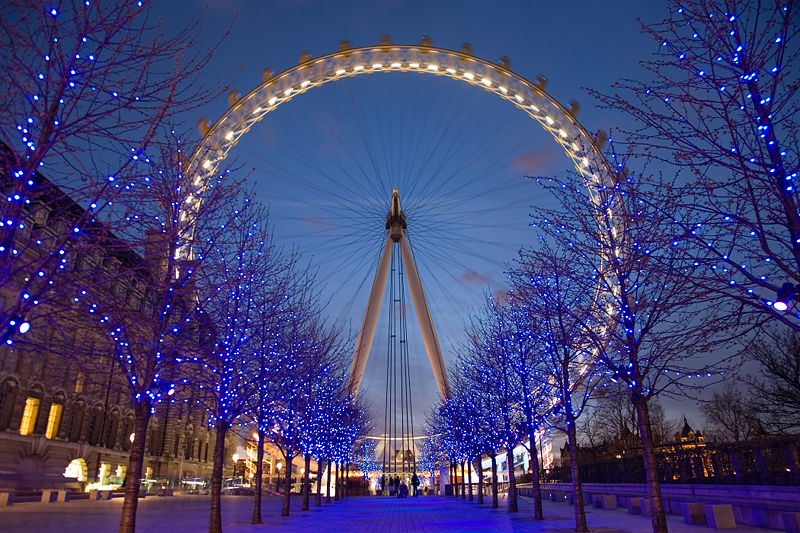
London Eye brought us sharply into touristville, but mercifully our pod on the Eye was almost empty. Mrs S and I had been once before, on a cloudy Autumn morning. On this April Tuesday it was bright and sunny – and plane-less, naturally – which allowed for far better views than we'd had before. The experience of seeing the whole of London laid out was only marred by Daughter#2's insistence on tearing around the pod and having a major terrible toddler tantrum; the two combined caused me to experience vertigo for the only time in my life so far.

London Eye<
Source: unknown

So, that concludes part one of our unexpected staycation in the UK, and a trip to London that included more traditional (child-friendly) tourist haunts than I'd normally elect to go to. Okay, so it wasn't as relaxing as Portugal would have been, but that's to be expected when you go to London.

Thursday, 29 April 2010

Coffee

Coffee beans

I have given up coffee.

I've had intentions of doing this before, and have managed a week at best. In total I have drunk coffee routinely since I was thirteen, or twenty full years out of my thirty-three. That's a lot of stimulant.

Except that my consumption was never excessive, and in comparison to other people was positively non-existent. I'd go so far as to say it was lightweight, wimpy. I can probably think of no more than three times where I've drunk more than three cups of coffee in a day; latterly, since I started commuting into the office from my home in Milton Keynes, a decent cup of coffee was required just to get the day at work started. Just one, mind. This is contrast to people I met recently in Geneva, who would drink five or six espressos in a morning just to be able to face the day. For me it was a milky americano at about 7.30, occasionally followed by another toward the end of the morning if the day was proving especially draining.

Coffee has on occasion done some strange things to me if I stepped outside of that one, maybe two cups a day range. I recall drinking two huge lattes in a café in Colchester that was trying to capture the whole Central Perk-esque, relaxed and convivial vibe of Friends. That was at about 10.30 in the morning. Despite not having anything else caffeinated for the rest of the day, thanks to that injection, I was still awake at 3.00 the next morning. And that's the thing that was most surprising about the event that led to my withdrawal from coffee; usually, coffee would have an effect on my head, not my body. I'd come away from a strong coffee feeling light-headed and not really 'with it'.

I read an article in Esquire last year detailing the negative side of coffee drinking but despite being worried to death by what it had to say, and despite a concerted effort to start drinking coffee every other day, I failed miserably. But still I never stepped outside that one or two cups a day range.

And then, a month ago, I went round to my parents' house and had a cup of Joe; nothing too hardcore, just from a jar. And then I went home and found Mrs S making one, so I thought I'd have another, again just from a jar. I wouldn't normally have two cups so close together, but I didn't think it mattered. Remember that two cups in a day, even if they're close together, isn't in any way excessive.

So it was a surprise to me that from the moment I finished that second cup, at about 11.30 that Sunday morning, through to when I went to bed, twelve hours later, I'd endured half a calendar day's-worth of heart palpitations so relentless and intense that I thought I was either having a heart attack or about to witness my own heart break free from the confines of my chest and bounce about all over the floor of my house like some sort of psycho Space Hopper. I was petrified, and couldn't see that coffee alone had prompted this feeling.

I don't know how I was able to sleep, but I did. However, when I woke up for work at 5.00 the next day those racing palpitations were still there, so I decided to call the doctors and get an emergency appointment. By the time I got there, my heart felt almost normal again – typical – and I was just left with an equally-worrying tightness in my chest.

I told the doctor about the coffees of the day before, at which she nodded sagely, doing that semi-sympathetic, semi-patronising smile medics are so adept at, and as she explained that caffeine had likely provided the trigger, I felt stupid and sheepish. And just as I was about to slope away apologising for wasting her time, she asked me if I'd been feeling stressed recently.

The answer was that I had. A week or two before that Sunday I'd experienced some of the most frantic, busy and stretching days at work I've ever endured. She said that the coffee may well have been the trigger for the palpitations, but that the stress had provided the conditions for my body to react differently than it would normally have. The trigger for the trigger if you like.

I was genuinely surprised. Up to that point I thought I'd managed stress in my life reasonably well. The impact of that Sunday was to make me rethink my approach to complexity and uncertainty generally, and I've (mostly) been more calm and balanced since then; more like how I've been told I appear on the surface perhaps, less internalising problems. In addition, I decided to give up coffee. Completely. Cold turkey.

A month later I haven't been tempted once to order an americano at all; not once. The physical effects I experienced that Sunday prompted such a fear of what something seemingly so innocuous could do to you that I just needed to cut it out completely.

So there you are; that's why I'm no longer drinking coffee.

Friday, 26 March 2010

Every Book

Go to: Audio Journal :: Documentary Evidence :: twitter.com/mjasmith

Items found and placed in a second-hand copy of 'Walking On Glass' by Iain Banks

Every book naturally tells a story; second-hand books often have the capacity to tell a totally different story to the one contained in the printed pages, but it is a story without narrative, with only the reader's imagination itself to determine the characters, plots and events in the story.

I bought two second-hand books from a café at a farm in Bedfordshire; the nominal amount of money they cost was donated to the Haiti earthquake appeal. The books were Breakfast At Tiffany's by Truman Capote and Walking On Glass by Iain Banks.

Inside Walking On Glass, at a seemingly random interval in the book was a white envelope, slit open crudely along the short edge; on the front, in pencil, the words 'WED 10.00'; on the reverse, in Biro, a few small doodles, a stylised star and the name 'Christina'. There was also a credit-sized cardboard advert for the Cineworld complex in Stevenage.

In the inside front cover, a red ink stamp proclaimed the book to have been withdrawn from the stock of South Tyneside library and sold for 20p.

On page 59, a reader had circled the page number with a blue Biro. The page, part of a sequence where one of the three main characters (Graham) falls deeper in love with Sara ffitch, is mildly moving, but nothing fundamental to the story compared to any other page in the book.

The objects, scribbles and circlings prompt questions: why did the book get sold? How did it find its way to Bedfordshire? What was so significant about page 59? Who is or was Christina? What happened at 10.00 on that Wednesday? Was it a date between the book's owner and the mysterious Christina? Did the date go well? Did they marry, move in together and decide, during a disposal of their combined individual possessions, to rid themselves of this book? You quickly move from seeing the clues as not independent items but part of a broader narrative that runs in parallel to the mystifying, curiously unreal and detached theme of the book itself. Just like the three apparently separate strands that run throughout the book, they coalesce into a semblance of a unified story.

My own additions to the book's story I am more sure of: I used the cover of a torn box of matches from Brasserie Lipp in Geneva as my bookmark, for no other reason than it was lying on the desk in my hotel when I was reading the book. In the back I put a torn corner of a page of an MC Escher desk calendar bearing the word 'Tokyo' and a folded yellow Post-It bearing a mobile number for someone I called weeks ago; both were lying on my desk at work and got swept into the cover of the book when I left the office for the day.

I'm tempted to keep them all in there, hand it into a charity shop, let the next owner find them and construct their own story about the book itself and its previous owners, a story that moves from South Tyneside to Stevenage to Geneva to Tokyo. It might mean nothing or it might nurture one of the finest pieces of modern literature; the point is we'll never know.

Follow me on Twitter.

Thursday, 18 February 2010

Travelodge, Hayle

Go to: Audio Journal :: Documentary Evidence :: twitter.com/mjasmith

Door to reception, Travelodge, Hayle

I don't think I understand the concept of 'no frills'. My understanding was that a no frills service or product retained the usefulness and core functionality of a more expensive equivalent, but did away with any unnecessary add-ons or peripheral additions. Think Ikea furniture versus Habitat – often very similarly-styled items only made of materials that perhaps won't endure quite so long, but in essence designed to fulfil the same principal use.

We stayed at a Travelodge at Hayle in Cornwall when visiting my niece in Penzance at the weekend which has turned my comprehension of a no frills service on its head. I've stayed in a Travelodge near Heathrow once before, and endured a thoroughly miserable night's sleep owing to the comings and goings of noisy travellers along the corridor throughout the night. However, that was pre-credit crunch and the corresponding rise in popularity of brands such as Travelodge and Premier Inn. I figured, mistakenly, that with that rise in popularity had come a rise in standards; more basically, I assumed that the Heathrow experience was just the product of its proximity to the UK's foremost airport, not a damning indictment of the chain per se. This trip wasn't our main holiday, and with a scarcity of accommodation around Penzance catering for families with small children, plus those hotels that did having family room rates of around £120 per night, we decided to go for the Travelodge at Hayle where the total stay for three nights was around £125.

Travelodge's ethos, according to the creased and stained literature in the room, is to make you feel better off, and in this regard they succeeded. And judging by the prevalence of Audis and BMWs in the car park it's a marketing strategy that's paying dividends. Paying for three nights what I'd have paid for one elsewhere was of course a big saving, and I did feel like I could afford to spend more generously elsewhere. I didn't; I decided that I'd do similarly uncharacteristic things like go to McDonald's for breakfast and stopping at a Harvester on the way home. Perhaps that makes me sound like a snob. Perhaps I am.

Exterior of Travelodge, Hayle

It's the sheer basicness, if that's a word, of the place that first surprised me. The furniture and set-up was nothing short of utilitarian – a simple desk, some hanging space for clothes, some open shelves and a bed, plus a sofa bed for our eldest daughter and plenty of floor space for our youngest daughter's travel cot. The bathroom, though tiny, had a decent shower. It was clear from the layout and lack of ornament that the room was designed to serve one solitary purpose, and that was for sleeping. You wouldn't – couldn't – choose Travelodge for a romantic break. Sleeping is really all we did there; we'd get back from my sister's house and go to bed, get up, get clean and get out. With only a curiously over-priced to-the-door breakfast available we were out early as well. I wonder if it's still cheap if you work out how much it costs per minute you're actually prepared to be in the room.

Still, so far, no major gripes. We saved money and slept, if not well, then at least enough to be able to start the day with at least a vague sense of feeling refreshed; also, the room seemed clean, but then again the carpet was of such a nauseatingly dense Seventies pattern that you'd have been hard pressed to tell. But there were some things which were beyond basic, and were instead just plain wrong. First, the bed had no support and left Mrs S – who hasn't got the best back at the best of times – feeling all sorts of aches and pains; the duvet cover was literally the same size as the bed, which meant – because of the inadequate storage heater (on all day, off all night) that we spent the night in a perpetually chilly duvet tug of war with one another; the duvet cover itself was open down one side; the mattress cover on the sofa bed was torn and hole-ridden and there were some dubious stains on the mattress itself; the back of the sofa bed literally came apart when I tried to make it up; towels were thin and threadbare; the sink had a crack in it; the room, in spite of being non-smoking, smelled of a combination of decades-old fags and contained a faint whiff of damp dog etc etc. Need I go on? Getting the picture?

It is possible, through staying at a Travelodge, to deduce what the chain must believe to be the 'frills' we can live without, and whether you agree or not that's tough. For example, a lock on the toilet door? No need. Buttons down the side of the duvet cover? Superfluous. Toiletries? Bring your own, cheapskate. Curtain hooks along the full length of the curtain rail? Come on, they close don't they? Quit complaining. You get what you pay for.

The last point is, I suppose, crucial: you get what you pay for. Michael O'Leary of Ryanair is the most prominent exponent of the 'pay peanuts, expect shit' mantra. We paid less than a third of the price for three nights that you'd pay at somewhere like The Soho in London for a single night, a place whose rooms are so stuffed with frills of all shapes and hues that you could be mistaken for thinking you were sleeping in a large doily. But that's really what I want from a hotel. Well, maybe not doilies, but hopefully you get the picture. We all deserve a little luxury when we travel, I say. I don't want to stay somewhere that's less luxurious than my own house. Sorry if that's not the credit crunch spirit.

If I've learned one thing from this stay, it's 'pay more, get more', and that's exactly what I'll be doing next time.

Follow me on Twitter.

Friday, 29 January 2010

The Roter Ochse, Heidelberg

Go to: Audio Journal :: Documentary Evidence :: twitter.com/mjasmith

The Roter Ochse, Heidelberg - signage
Source: Zum Roten Ochsen website

'I really want a proper German meal this evening,' announced Martyn as we boarded the train at Frankfurt Airport headed for a couple of days of meetings in Heidelberg.

Cruising toward Mannheim Hauptbahnhof on the plush and punctual Deutsche Bahn ICE service, ruthlessly efficient as most things German tend to be, I contemplated the prospects of actually finding anything to eat on a menu which to misquote Henry Ford, allows you to have anything you want to eat, so long as it's meat. Perhaps, I thought to myself, I'd suggest just heading downstairs to the Marriott restaurant where I knew the menu would be slightly more accommodating.

At the Marriott Heidelberg reception Martyn asked if the concierge could recommend a good traditional German restaurant in the town. He suggested a place which made Martyn's face light up – a good restaurant that brewed its own lager on the premises. What the hell? I thought. After all, the last time I was in Germany was 1994 and I figured they must have embraced vegetarian dishes by now.

After sitting on our posteriors all day in various planes, trains, taxis and meeting rooms, we decided it would be a nice idea to take a brisk walk to the restaurant, perhaps seeing a bit of Heidelberg while we were there, rather than just ferrying ourselves between hotel and meetings like we'd usually do. The concierge handed us a map, drew the route with a Biro and told us it would probably take about half an hour to walk, so off we strolled food-wards, along a wide boulevard dominated by nineteenth century architecture with subtle Gothic details and interspersed with sleek modern hotels.

Along Hauptstrasse in the old town we commented how well they had integrated modern store fronts with the old buildings and tried to avoid feeling disappointed at the prevalence of brands we'd be used to on high streets in the UK and feeling somewhat surprised to see two brands we regard as defunct (Woolworths and C&A) still open for business.

Further along Hauptstrasse the modern shops were replaced by more classically old German pubs and restaurants, any sleek and trendy places standing out as incongruously as our attempts at pidgin German to ask directions when we acknowledged we didn't have a clue where we were supposed to be heading, the map suddenly offering no clues and the wan glow from the street lamps making it nigh on impossible to read it anyway,

With every seemingly traditional German gasthaus that we passed, and with growing appetites, Martyn would growl 'If this place we're heading to is modern, we're going to that place,' and as we rounded the corner finally into Leyergasse and saw the place we'd been recommended, all bright lights and atmosphere denuded of tradition we backtracked and ducked into the Roter Ochse, whose signage proclaimed that it had been built in 1703.

The signage also said that this was a traditional student pub, which initially brought back uncomfortable memories of the Union bar at university, though this was dispelled almost instantly when we opened the door and the sound of a raucous piano sing-along filled our ears. We took the end of a table, taking in the low ceiling and walls, every inch cluttered with photos, memorabilia and all manner of other ephemera from the pub's past.

Over a couple of local beers we perused the simple printed menu, finding to my horror that acceptance of vegetarians hadn't progressed that much in fifteen years. We ordered some potato soup, and I found the singular meat-free dish on the menu (a rich mushroom stew with a single dumpling and pickled side-salad), both of which were full of rustic flavour. As we talked and put the world to rights, the pianist, Rudi, rested his newly-refreshed steiner on the top of the ancient upright piano and hammered out a combination of familiar German songs and Broadway show tunes, occasionally leading his friends at the front of the pub to engage in rapturous baritone singing. Every time he picked up his beer and headed back toward his friends, one hand signalling very clearly that he was done playing, grunts of dissent made him head back to the stool, grinning, clearly enjoying his moment in the spotlight.

The music and sporadic laughter, combined with a place more full of character than I think I've ever been to before, leant the place a conviviality that I suppose I wasn't expecting when we set of for the town that night. As we left, at a relatively respectable 10.30, we realised that we were the only customers left. Apologising to the landlord, we found ourselves being told about the history of the Roter Ochse. Amazingly in this world where tradition is all too often usurped by commercial ambition and the seductive nature of the profit margin and the bottom line, we discovered from Philipp Spengel that the pub had been in the same family for six generations since it had opened.

The history is well documented on the pub's website, but by way of short précis, the Spengel family ownership of the Roter Ochse began with the purchase of the premises by Albrecht Spengel in September 1839, and became a firm favourite among students under the stewardship of Albrecht's son Carl; later, as other descendants took the reins the guest book was filled by numerous luminaries from the arts world and science disciplines. For us, it was just a great place to eat, drink and talk.

Sated, both in terms of sustenance and ambiance, we headed back to the hotel, pausing briefly to consider getting a cab before agreeing to hit the pavements again instead.

Follow me on Twitter.

Tuesday, 22 December 2009

A Yule Blog

Go to: Audio Journal / twitter.com/mjasmith

A Christmas Carol by Charles Dickens - image (c) Penguin Classics
Copyright: Penguin Classics

It has become customary to brand those who either cannot or will not enter into the spirit of Christmas as a Scrooge, after Charles Dickens’s most celebrated ne’er do well. Christmas, according to Dickens, is all about upholding tradition, and one of the rituals that I have undertaken the past four years, and which I intend to continue for the rest of my days, is reading A Christmas Carol every December. This year, for the first time I began to see the good in Ebenezer – not in the changed character that we are presented with at the end of the book, the man suddenly able to embrace the festive season and all the values good-natured people have, but the mean-spirited, cantankerous fellow we are first presented with.

Ebenezer Scrooge is indeed one of the most misanthropic characters ever created, but he does have some good qualities which wouldn’t go amiss in most people today.

For starters, he may be extreme in his distaste for charity and goodwill to all men, but he also sees through the false way that people go about their business at Christmas. He simply cannot abide the way people see fit to descend upon those they have taken no interest in at any other point in the year, bestowing pleasantries and forgiveness that will be quickly forgotten once the festivities are over and done with. Fair weather friends have no place in Ebenezer’s world.

Secondly, Scrooge’s tightfistedness and frugality are values which would do well to find their way into many households this Christmas. The gods of capitalism and Government-sponsored borrowing excess seem to have replaced the son of the deity Christmas is meant to celebrate. The sums of money households have expended for one day are often frightening, and one can only hope that these straitened times give rise to a restoration of traditional values at Christmas going forward.

Indeed, if we surmise that Scrooge’s name ‘being good upon ‘Change for anything’ and his residing in the City of London connects Ebenezer to the financial heartland of the United Kingdom, we should celebrate Scrooge’s miserly ways and extreme prudence in his professional ethics at the very least. For those of us presently employed in financial services, facing either an unhappy unemployed Christmas or an uncertain 2009, a bit more of those traditional principles wouldn’t have gone amiss these past few years. Gordon Gecko’s mantra of ‘greed is good’ isn’t that dissimilar to Scrooge’s belief in absolute parsimony. Except, where Gecko would flashily spend his millions on art and other signs of wealth, Scrooge is happy to live the most austere of existences, using barely any fuel to heat his modest home and eschewing elaborate food in favour of simple gruel. Although I can’t abide his wanton grouchiness, I can’t help but feel that Scrooge would have the right strategy for dealing with today’s downturn. Certainly the impact of rising fuel and food prices over the past eighteen months would have barely bothered our Scrooge.

**********

I only recently remembered the letters we used to write to Father Christmas each year and the letters my sister and I would get back, written in a hand curiously similar to my father’s. I remember the tinsel on the family tree, the silver and purple baubles that looked like disco balls, the advent calendar depicting a sweetshop administered by cute elves that would be retrieved each and every year; the brass candle holder where the heat from the candles pushed an angel blowing a trumpet around in perpetuity, each circuit accompanied by a chiming sound from the bells positioned underneath her; I recall the family meals with my maternal grandmother, now several years gone, and the way she’d always greet the arrival of the food with ‘I’m never going to eat all this,’ but would nevertheless manage it anyway, and the way my father and I would drive her home in the evening with two carrier bags on the floor of the back car seats, one containing a pair of slippers and the other containing the carcass of the turkey wrapped in foil for whatever macabre purpose she required it for; I remember the excitement of opening a box of liquorice Allsorts, the increasing complexity of my list throughout my teenage years and the increasing sense of confoundedness that my selections were greeted with by my mother.

I recall the intense joy of looking over the presents I’d received in their little pile in my parents’ lounge and the way I’d want to keep them so piled for as many days as possible to stave off the inevitable putting away and the rapid onset of a new school year that followed; I recall my sister and I sitting impatiently on the top step for my mother to come back up to offer confirmation that Father Christmas had indeed been, and the increasing frustration at how long my father was taking in the bathroom since, without him, we weren’t allowed to head downstairs to tear into our presents; I recall the disappointment at having grapefruit and mandarin as a starter before roast turkey and the joy at the times we had prawn cocktail instead; I even have a pleasant feeling recalling the pain in my nose from trying to clip on those nasty little plastic moustaches you’d find in your cracker; I recall, back when I ate meat, loving the salty taste of turkey sandwiches that would be prepared in the early evening of Christmas Day and the feeling of intense gluttony that I went to bed with; later I recall sadder times, absent family members and the onset of illnesses, adult arguments and relationship breakdowns. The clarity of these memories in totality is greater than many other recollections from years gone by.

Christmas evokes in you so many memories of yesteryear. Few other times bring forth the recollections of your earlier years so readily. I only hope that our children sit here in thirty-odd years with the same vividness of memorable festivities, with so many pleasant recollections of Christmases past and the anticipation of Christmases yet to come.

An extended version of this piece originally appeared on The First Days Of My Thirties blog in 2008. A Happy Christmas to all My Other Blog subscribers.

Follow me on Twitter.

Monday, 30 November 2009

A Wet London Monday

Go to: Audio Journal / twitter.com/mjasmith

Dead Umbrella by Rory (Flickr)
Source: Rory (Flickr)


Like most places in the South East of England this morning, the square outside Euston Station was lashed by wind and rain; it's usually a ersatz wind tunnel but today you could feel the gusts and swirls inside the station building well before you stepped outside.

Out along Euston Road I passed the upturned skeletons of about five dead black umbrellas. It was like the place where umbrellas go to die; an umbrella graveyard if you will.

Watching the Met Line train pull onto the platform at Euston Square, it was so steamed up with condensation that it was impossible to tell how busy it was until the doors opened, while on the train itself the floor was so wet you couldn't put your bag down.

Just by the Dashwood building there was a stripped skeleton of an umbrella that looked like it'd been ravaged by a wild beast rather than what they're calling, in typically understated fashion, 'inclement' weather. Inclement weather simply sounds mildly irritating, not like the type of weather to wash Cumbrian towns slightly closer to the south.

At the queues for the lifts there was a young woman in a skirt that was shorter than her jacket (which wasn't exactly long in the first place). There was me soaked to the skin and wrapped up for a blizzard whereas she was dressed for a night out in Newcastle.

In the café on the floor of our building the barista moaned that the weather meant he was going to be rushed off his feet because people who would usually go out for coffee would go to him instead. Someone else in the queue pointed out that it's still possible to hold an umbrella in one hand and a coffee in the other, but the barista – looking increasingly deflated as the queue got longer – just shrugged dejectedly.

Follow me on Twitter.